November 5, 2026
Asphalt driveways and parking lots are among the most durable, cost-effective surfaces you can install on your property. However, a smooth and reliable finish doesn't happen by accident. Achieving a flawless surface that withstands decades of heavy traffic and seasonal weather requires meticulous planning, technical expertise, and rigorous execution from the ground up. Whether you're installing a new commercial parking lot or updating a residential driveway, understanding the complete process will help you make informed decisions for your property.
Many property owners assume that the quality of an asphalt paving job depends solely on the top layer of blacktop that you see and drive on. While high-grade hot-mix asphalt is certainly critical, the true structural integrity of any paved surface relies entirely on what sits underneath it. Proper site preparation, rigorous soil analysis, and precision base grading form the hidden foundation of every successful project. Without proper site preparation and drainage management, even the thickest layer of asphalt paving will crack, sink, and fail prematurely.
Evaluating Soil Quality and Base Preparation
Before a single piece of heavy paving equipment arrives on site, professional contractors must perform a comprehensive assessment of the existing ground. Every successful asphalt paving project begins with thorough soil testing to evaluate subgrade stability and base aggregate composition. Different types of soil behave in drastically different ways when exposed to moisture and shifting temperature cycles. For instance, soils rich in clay tend to retain water and expand when frozen, which can cause severe shifting and heave beneath paved surfaces.
Once the soil conditions are evaluated, the site preparation process begins with excavating soft or unsuitable earth. Workers clear away debris, roots, organic topsoil, and old material to expose a solid subgrade layer. If weak or poorly draining subsoil is identified during testing, contractors usually incorporate geotextile stabilization fabrics or import dense aggregate materials to reinforce the base. Establishing a robust subgrade is the most crucial step in preventing future rutting, structural depressions, and premature surface failure.
After the subgrade is fully cleared and stabilized, a thick base layer of crushed stone aggregate is spread evenly across the area. This sub-base acts as the main load-bearing foundation for your new asphalt paving surface, distributing heavy vehicle weights across the underlying earth while providing a natural buffer against ground movement. Contractors compact this aggregate base using heavy mechanical rollers to eliminate air pockets and guarantee a firm, unyielding foundation that can easily support daily vehicular traffic for years to come.
Executing Precision Grading and Water Drainage
With the aggregate base in place, contractors move on to one of the most critical phases of the entire installation process: precision base grading. The primary goal of base grading is to establish a smooth, uniform contour while carefully controlling how water flows across and off the site. Water is the absolute single greatest enemy of any paved surface. If water is allowed to pool along the surface or seep beneath the edges, it'll quickly weaken the aggregate base, erode subgrade support, and cause devastating structural cracking.
To guarantee perfect slope and contouring, modern paving contractors utilize advanced GPS and sonic grading technology. By integrating high-accuracy GPS equipment directly into grading machinery, operators can shape the sub-base with extreme precision according to custom engineered digital models. This state-of-the-art technology eliminates human error and guarantees consistent slope calculations across large surfaces, commercial parking lots, and complex driveways alike.
Proper base grading ensures that rainwater and snowmelt drain away from buildings, foundations, and high-traffic areas toward designated drainage basins or natural outlets. In addition to guiding surface runoff away, precision grading establishes an even layer depth for the hot-mix asphalt paving that follows. When asphalt is laid at a uniform thickness over a perfectly graded base, it cools evenly, compacts to optimal density, and eliminates low spots where standing water could otherwise accumulate and cause winter freeze-thaw damage.
Applying Hot-Mix Asphalt and Final Compaction
Once the aggregate base is graded, compacted, and thoroughly inspected, the property is ready for the application of the hot-mix asphalt paving material. Asphalt is a precise mixture of stone aggregates, sand, gravel, and liquid petroleum binder mixed at elevated temperatures. The liquid asphalt binder acts as a strong glue, holding the rock aggregates tightly together while providing the flexibility necessary to accommodate heavy vehicular loads and subtle temperature shifts without shattering.
The hot asphalt mix is transported directly to the job site in insulated trucks to maintain optimal application temperatures. Heavy paving machines carefully spread the material over the prepared aggregate base at a specified thickness, ensuring an even layer across the entire area. Timing and temperature management during this phase are paramount. If the mix cools too quickly before it can be thoroughly compacted, the finished pavement will contain excess air voids, making it porous and susceptible to water penetration and surface crumbling.
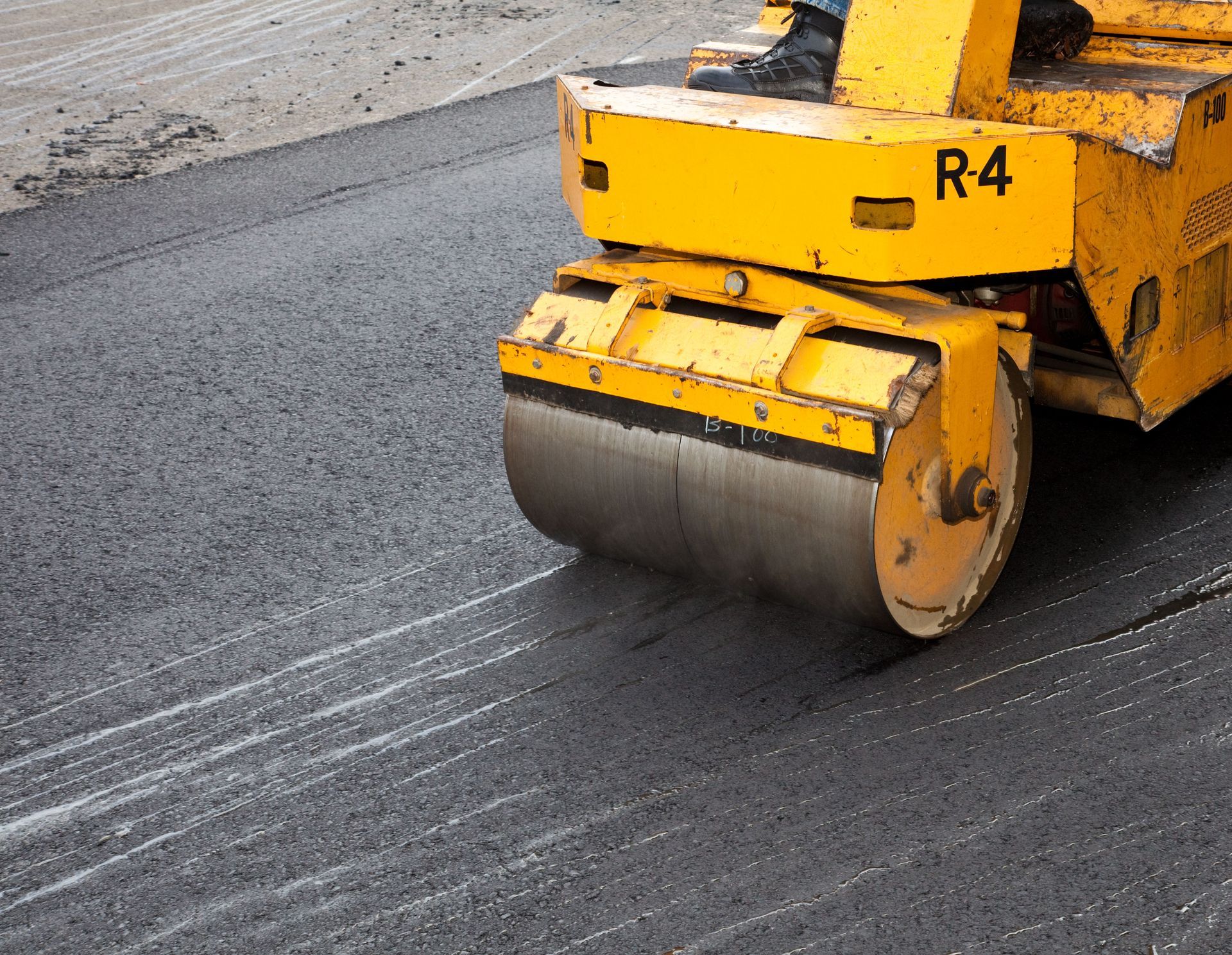
Immediately following the paver, heavy vibratory steel drum rollers move over the fresh hot-mix asphalt paving to compact the surface tightly. Compaction forces the aggregate particles together, squeezes out trapped air, and binds the layer tightly to the base below. Specialized roller operators work in coordinated passes to achieve the exact target density and smooth out any visible seams or joints. Once the final compaction passes are complete, the new surface is allowed to cure and harden, leaving behind a smooth, dark finish ready for traffic.
Maintaining Surface Integrity and Maximizing Lifespan
Installing a high-quality paved surface over a pristine, graded foundation gives your property an attractive and dependable feature, but ongoing care is vital to keeping it that way over time. According to This Old House, an asphalt driveway that receives routine maintenance generally lasts between 15 and 20 years before requiring replacement. Understanding how to protect your investment through simple preventive routines will save you thousands of dollars in premature replacement costs and preserve your property's curb appeal.
The most critical maintenance practice for any asphalt paving surface is routine crack filling and sealcoating. Over time, exposure to solar ultraviolet rays, heavy traffic, gasoline, and harsh winter deicers will cause the petroleum binders in asphalt to oxidize and dry out. As the binder oxidizes, the surface turns grey, becomes brittle, and develops small surface hairline cracks. Applying a professional-grade sealcoat every two to three years seals the surface against chemical spills and water infiltration while restoring the rich dark appearance of the original blacktop.
In addition to regular sealcoating, property owners should perform periodic inspections to address small repairs before they escalate into major structural issues. Small cracks should be sealed with hot-pour rubberized joint filler immediately to keep water from penetrating down to the aggregate base. Furthermore, keeping the surface clean of oil drips, removing winter snow promptly without damaging the edges, and maintaining clear drainage pathways will protect the structural base beneath your asphalt paving, ensuring it delivers reliable performance throughout its full expected lifespan.
Choosing experienced professionals who utilize advanced equipment and proven site preparation methods makes all the difference when investing in new pavement. By prioritizing thorough soil evaluation, GPS-guided base grading, and proper long-term maintenance, you can rest assured that your new surface will withstand heavy use and seasonal weather year after year. If you're ready to transform your property with smooth, durable blacktop solutions built to last, contact Pave Grade today to request your free estimate within 48 business hours.